Front Headlight Bi-LED Projector Conversion
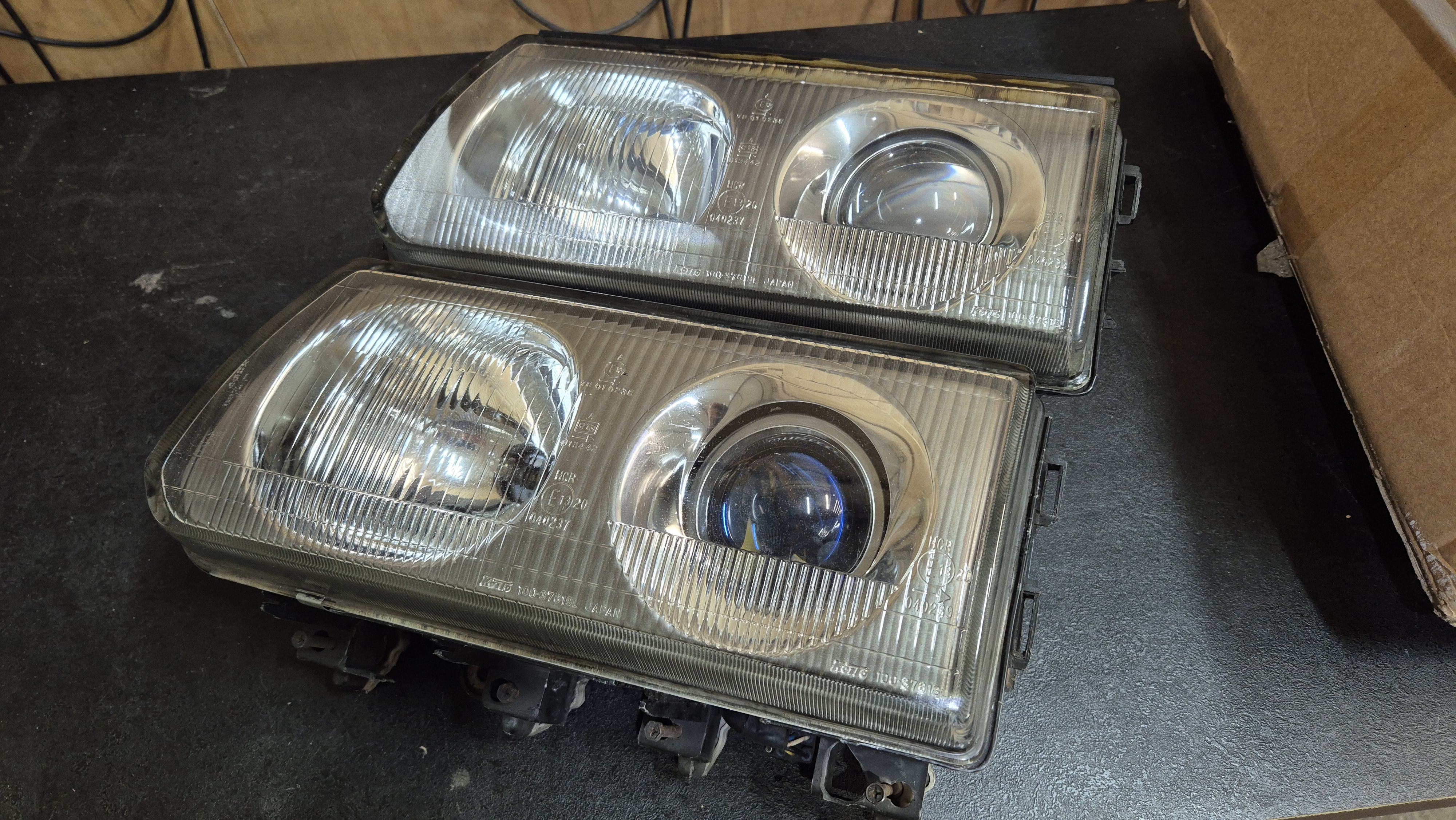
Factory headlights in the L300
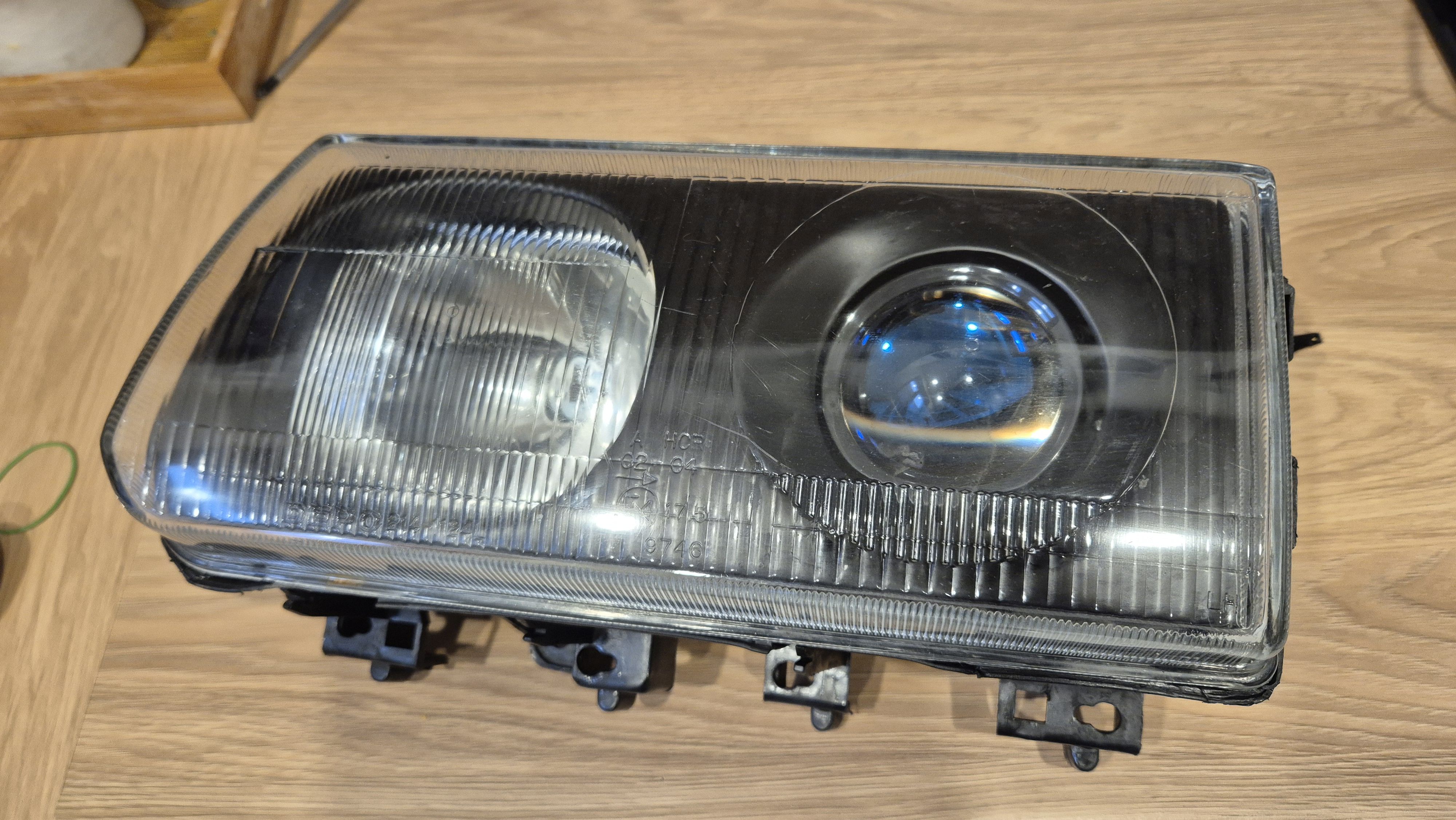
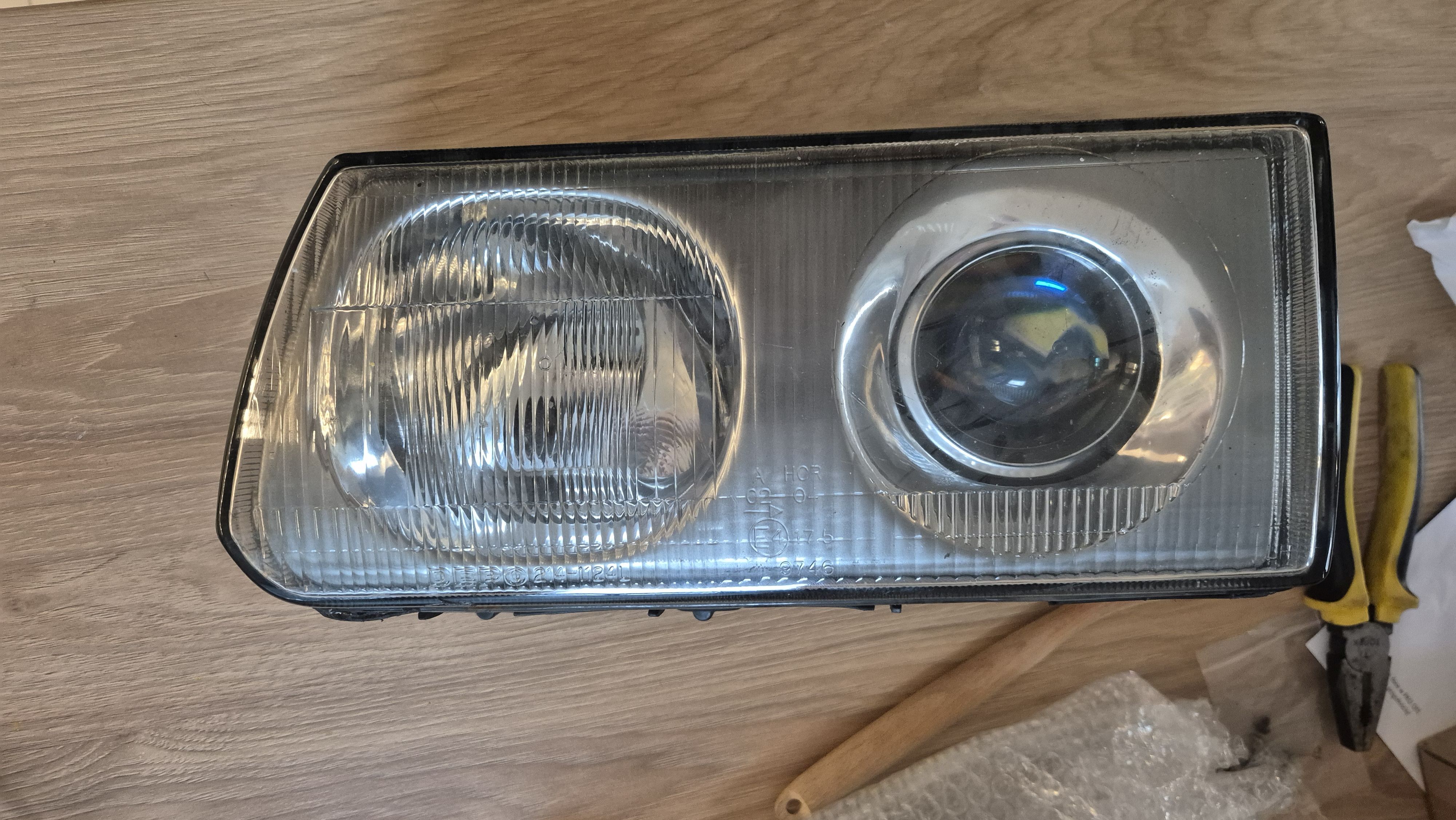
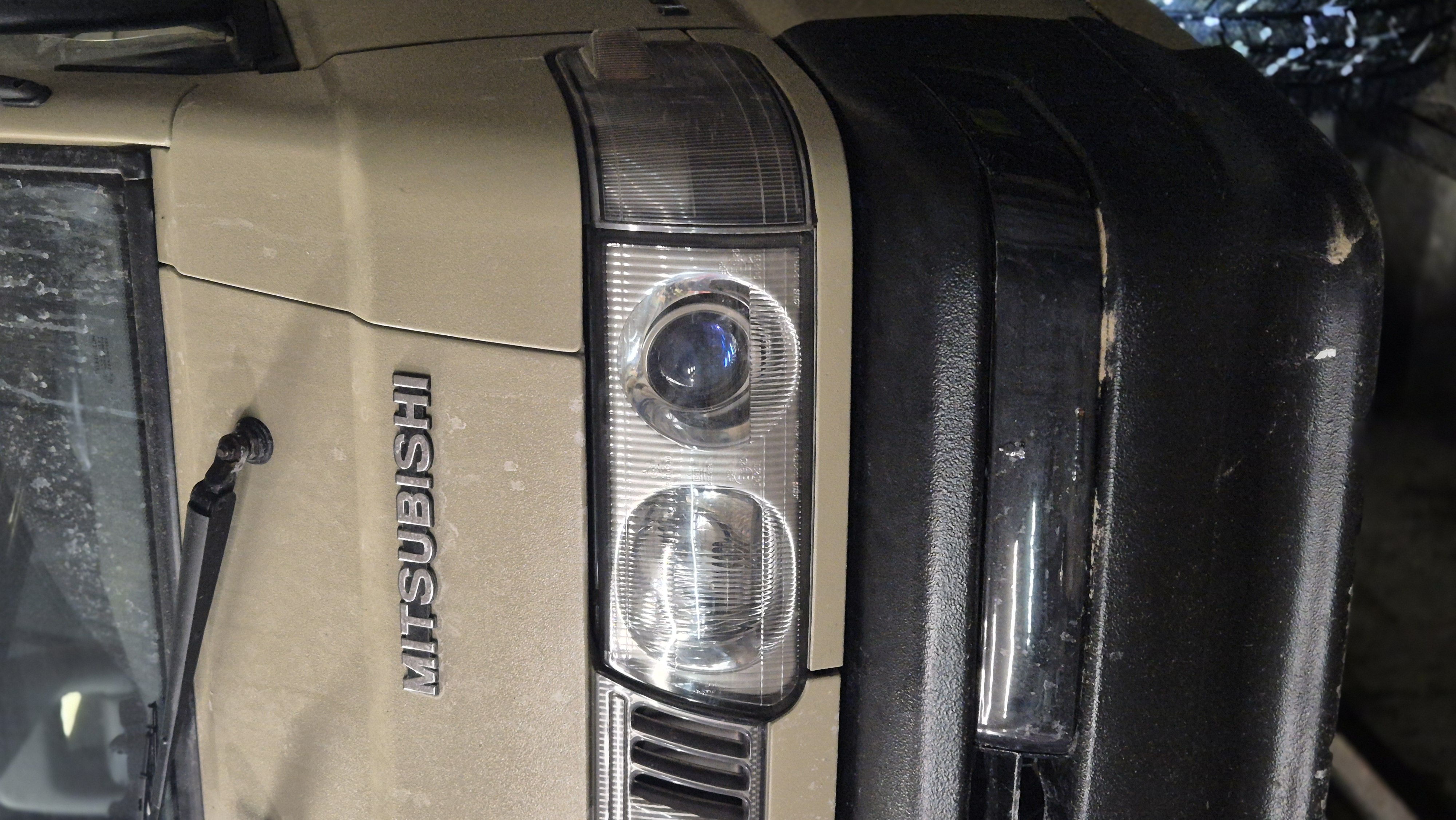
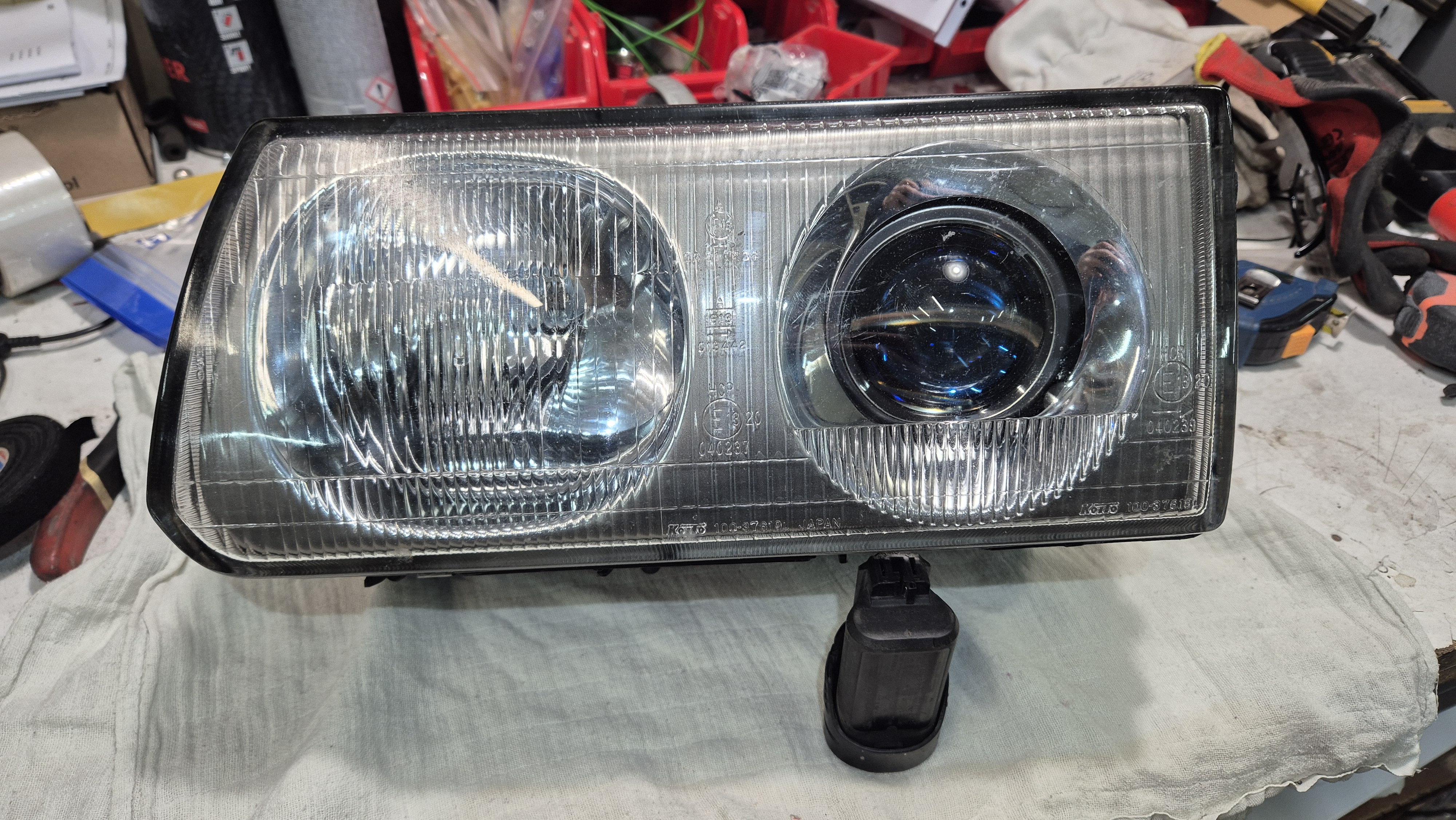
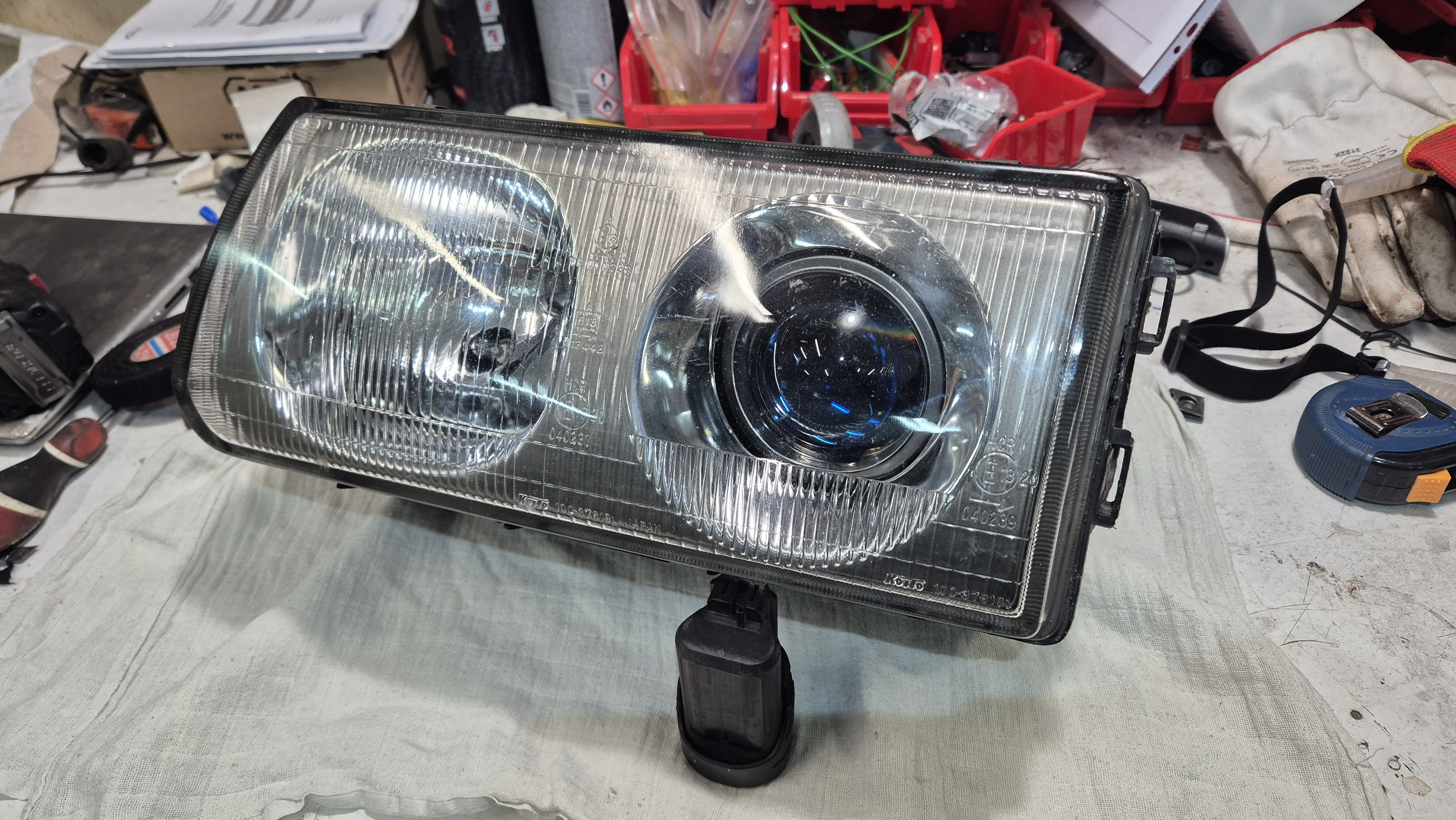
Depending on the model year, the Mitsubishi L300 came with two different front headlight designs. Early versions used simple square headlights with regular bulbs, while later models got a more modern combined headlight with a projector lens for low beam and a separate reflector for high beam.
What’s interesting is that even after more than 30 years, the factory headlights are still surprisingly well made. Real glass lenses, solid metal reflectors and decent projector housings — back then things were built properly. Even today the original lights still perform reasonably well. But lighting technology has moved forward massively, and modern LED projectors are simply on another level.
If you want to copy this setup, the full parts list is included near the end of the article.
Main goals of the conversion
Like with most modifications on this build, the main goal was to keep everything fully reversible and avoid destroying original parts.
The priorities were simple:
- fully reversible modification,
- keep all factory functions,
- retain both manual and electric headlight adjustment,
- keep the original factory look from the outside,
- projector stays in exactly the same position as the factory lens.
Opening the headlights
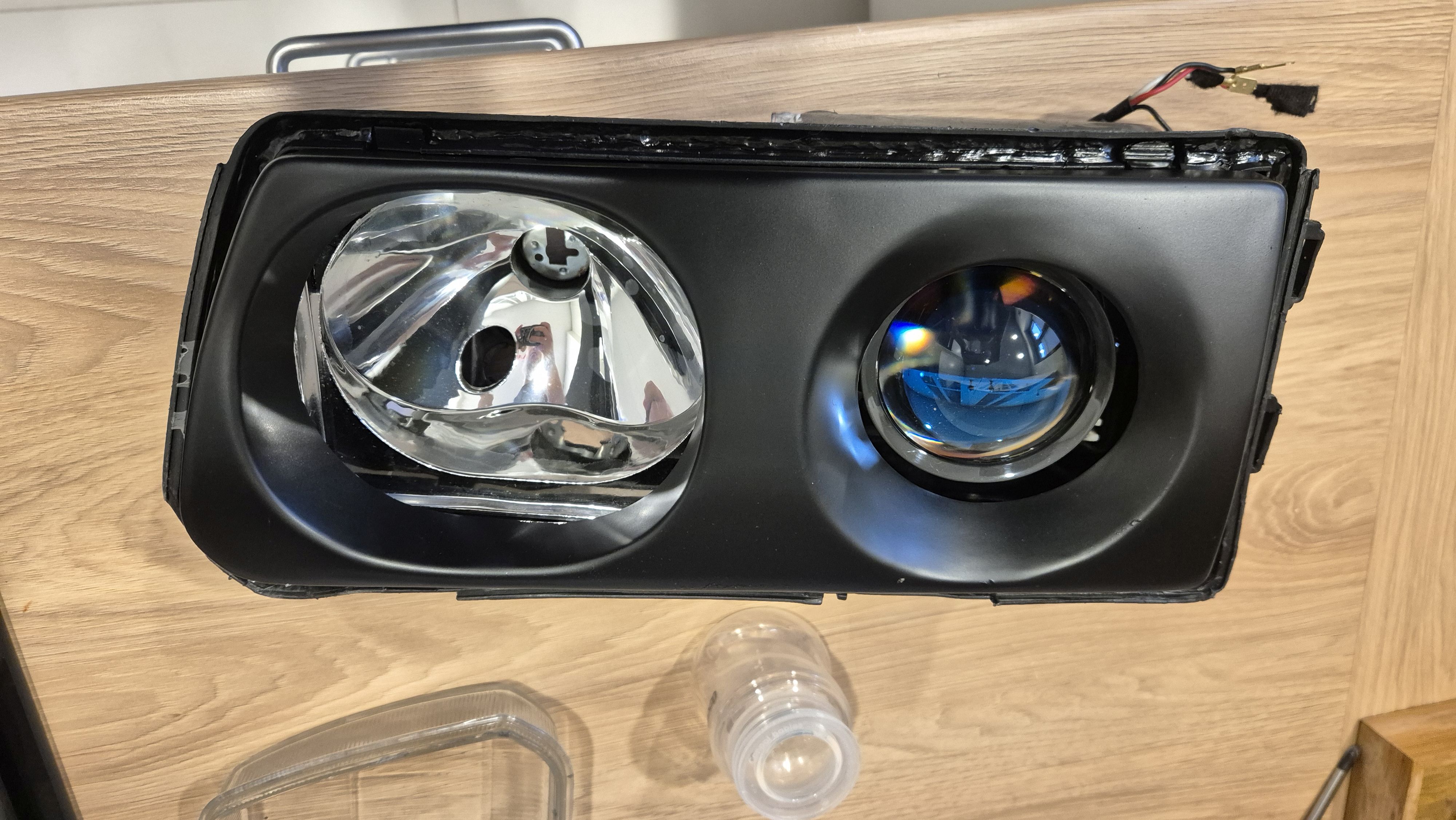
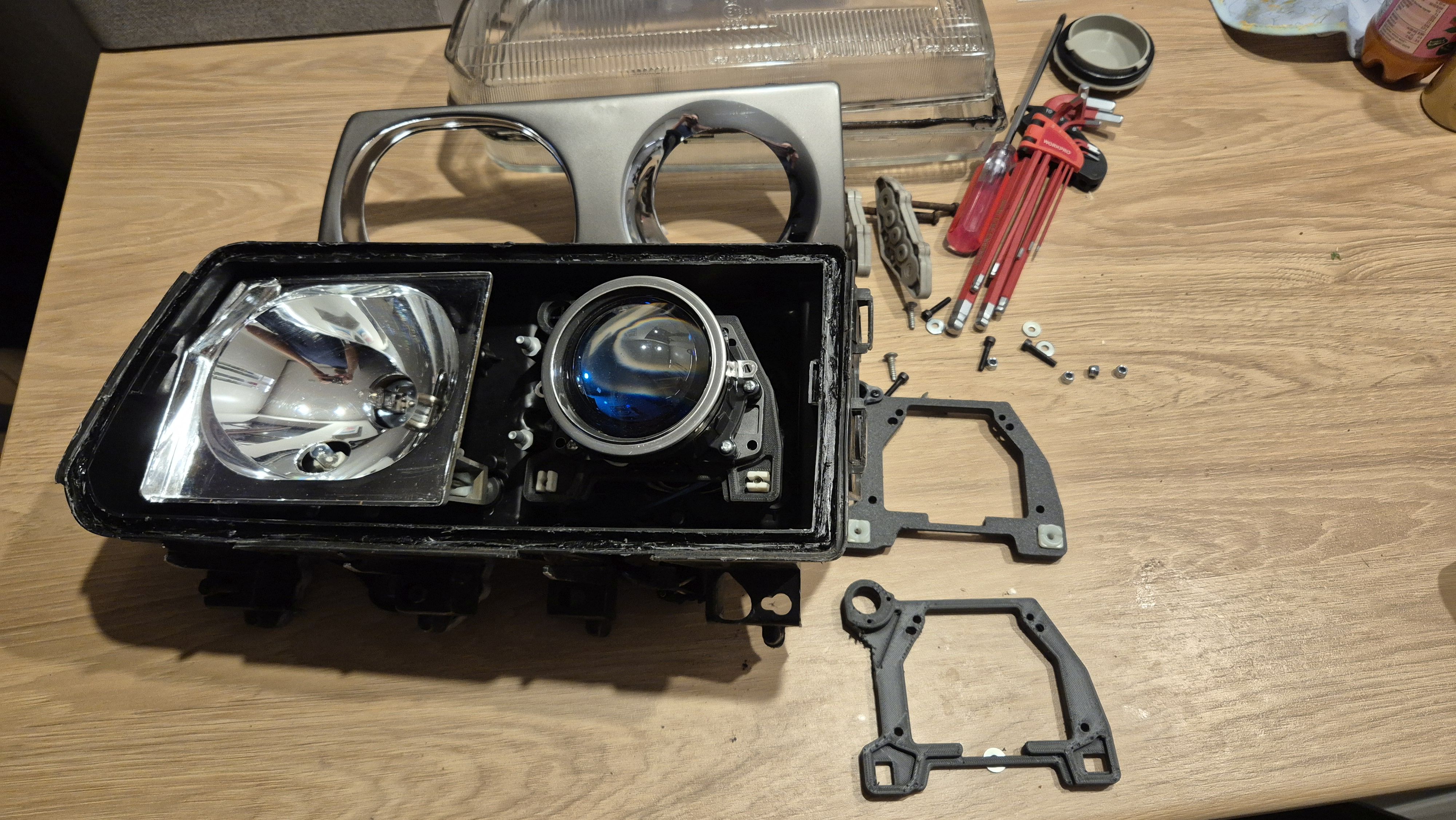
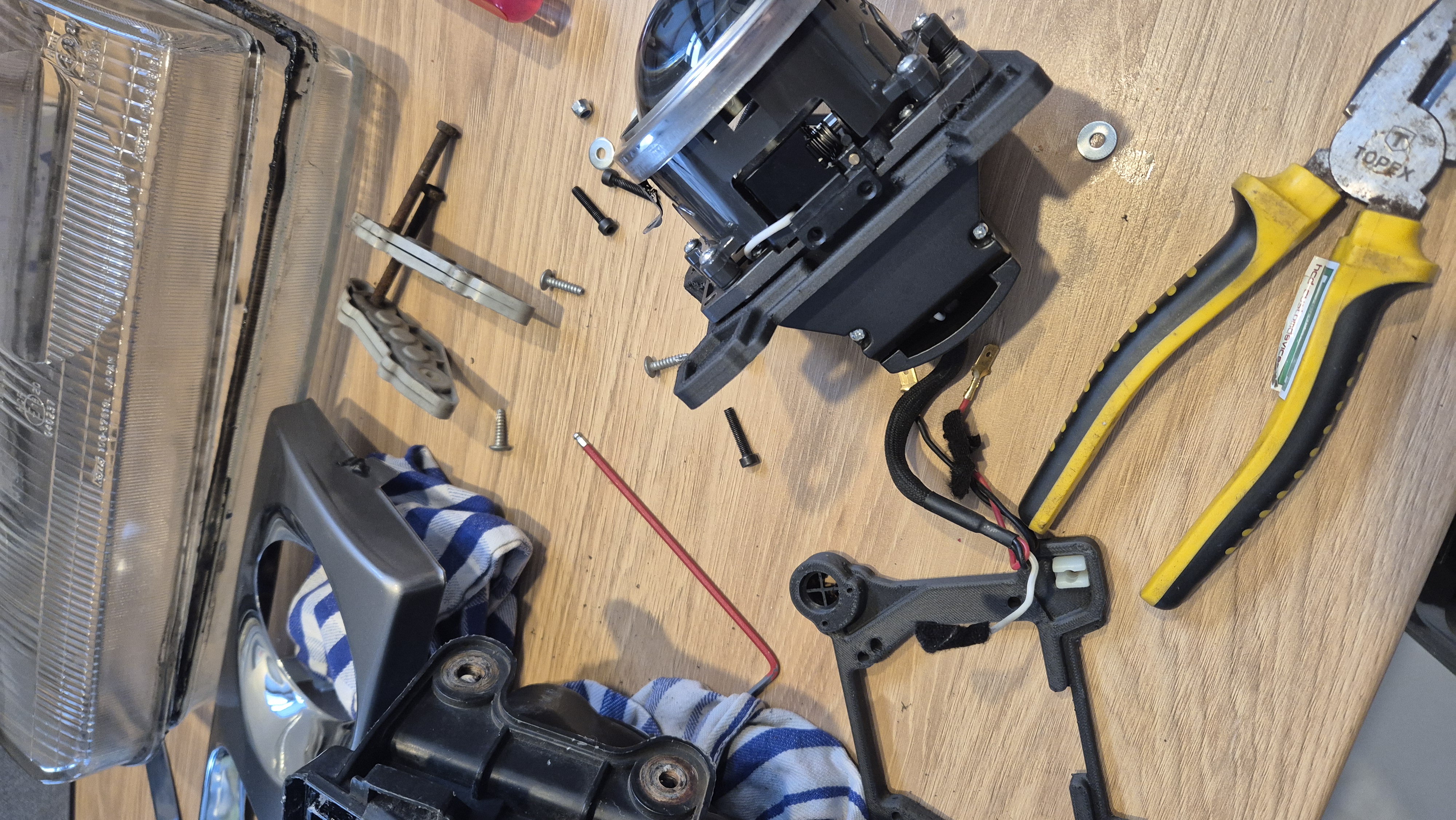
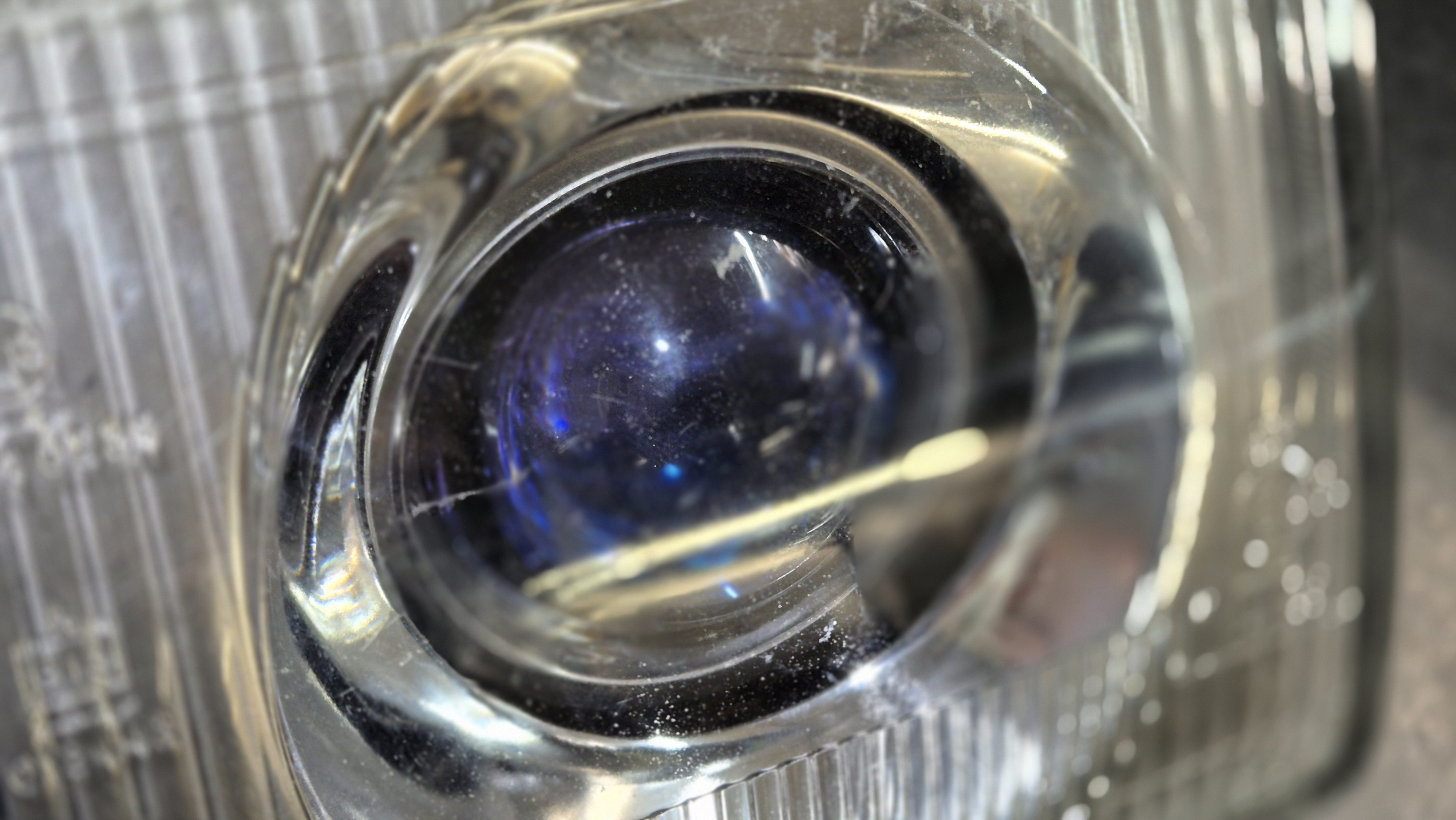
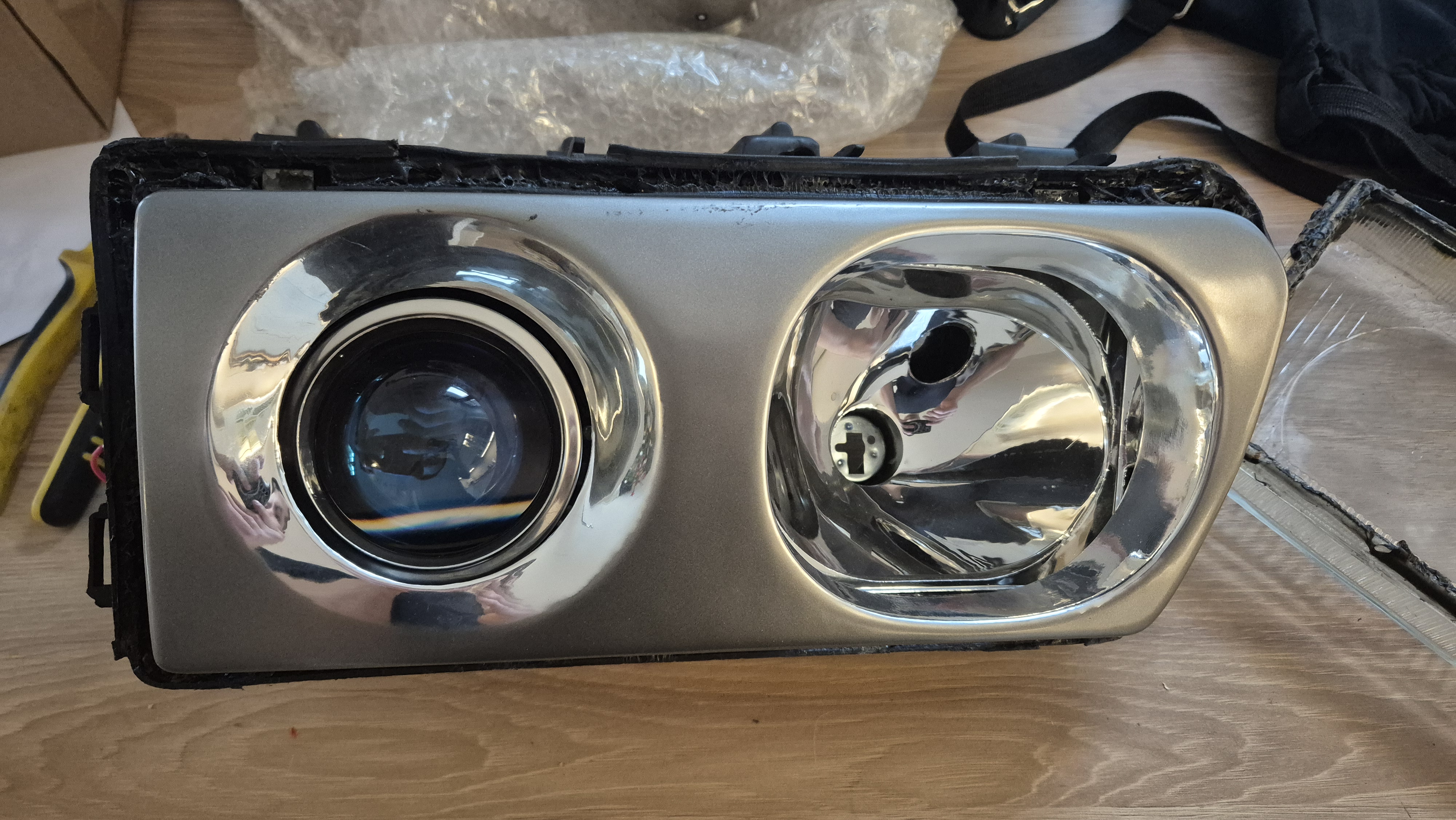
The original headlights had to be completely disassembled first. Since the lenses are real glass and the housings are properly sealed, opening them without damage takes some patience.
Designing the adapter
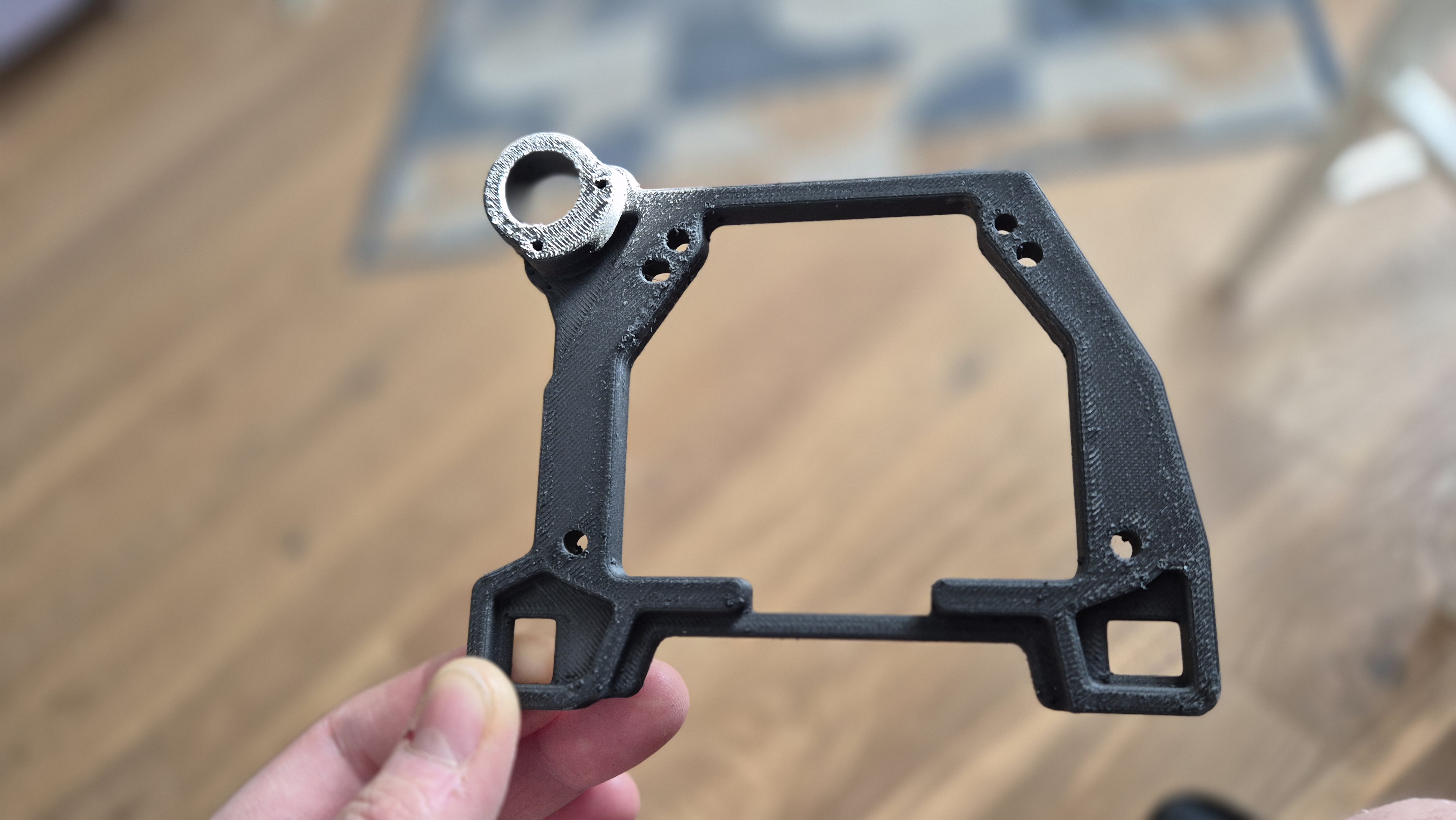
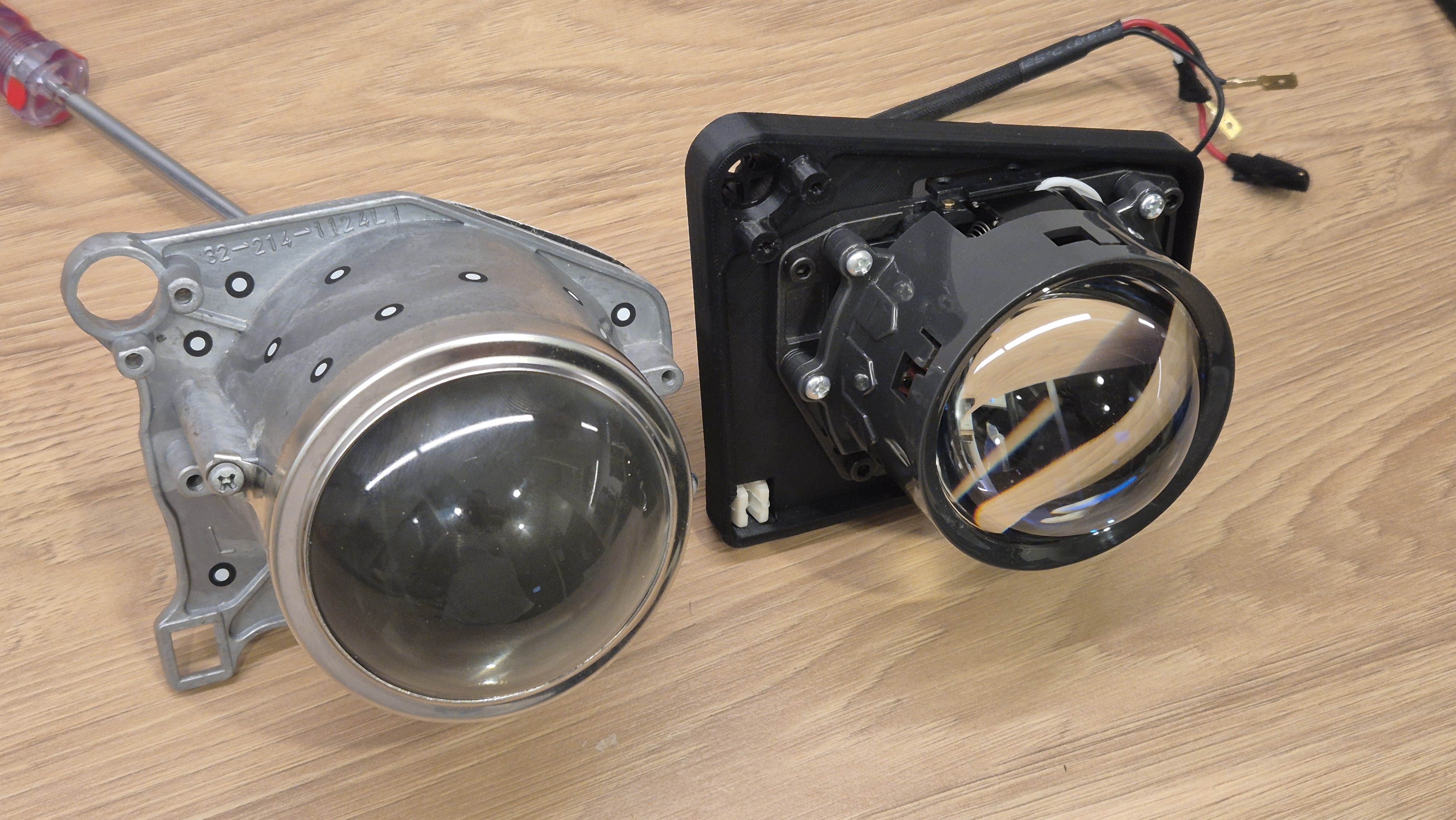
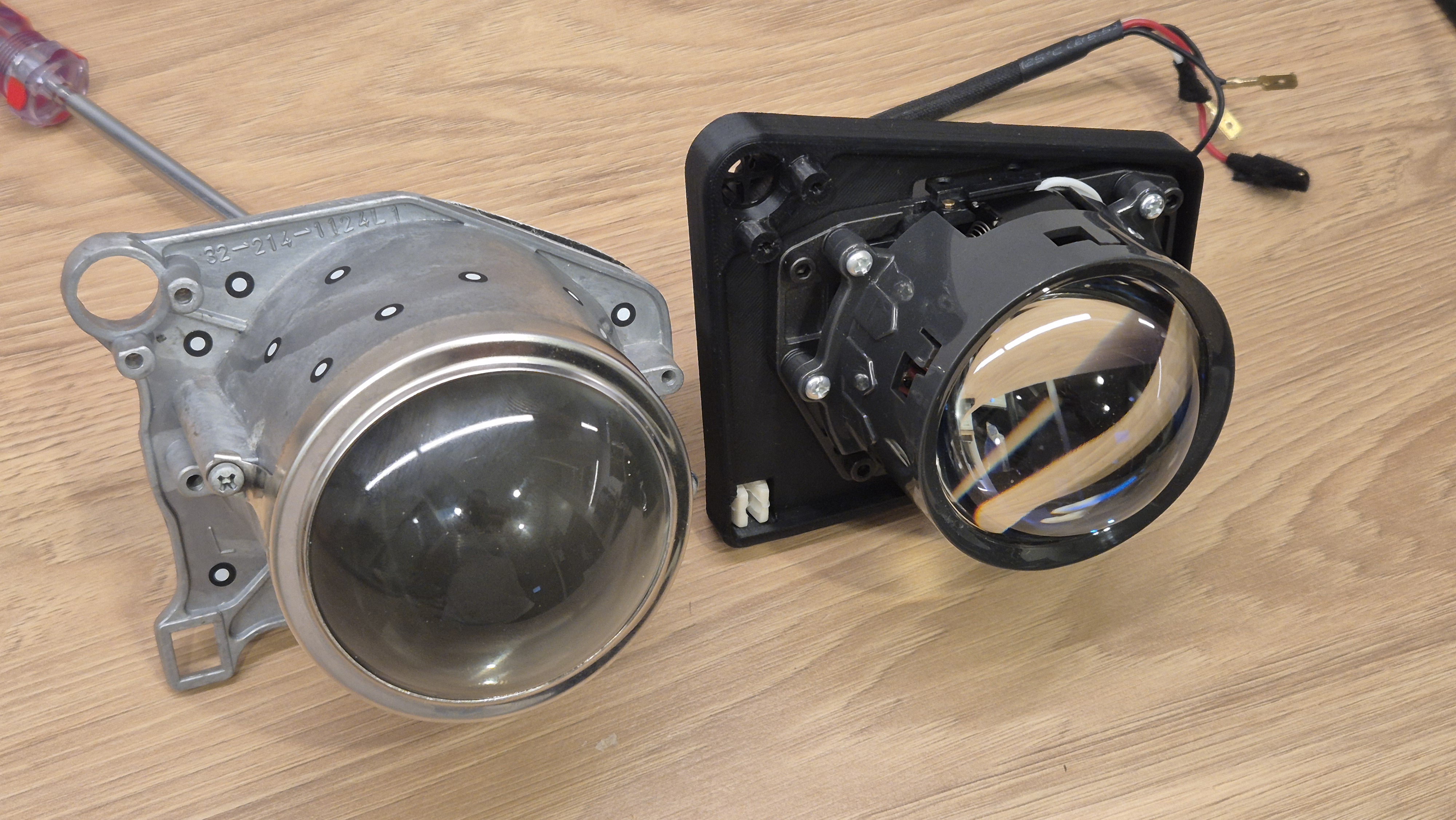
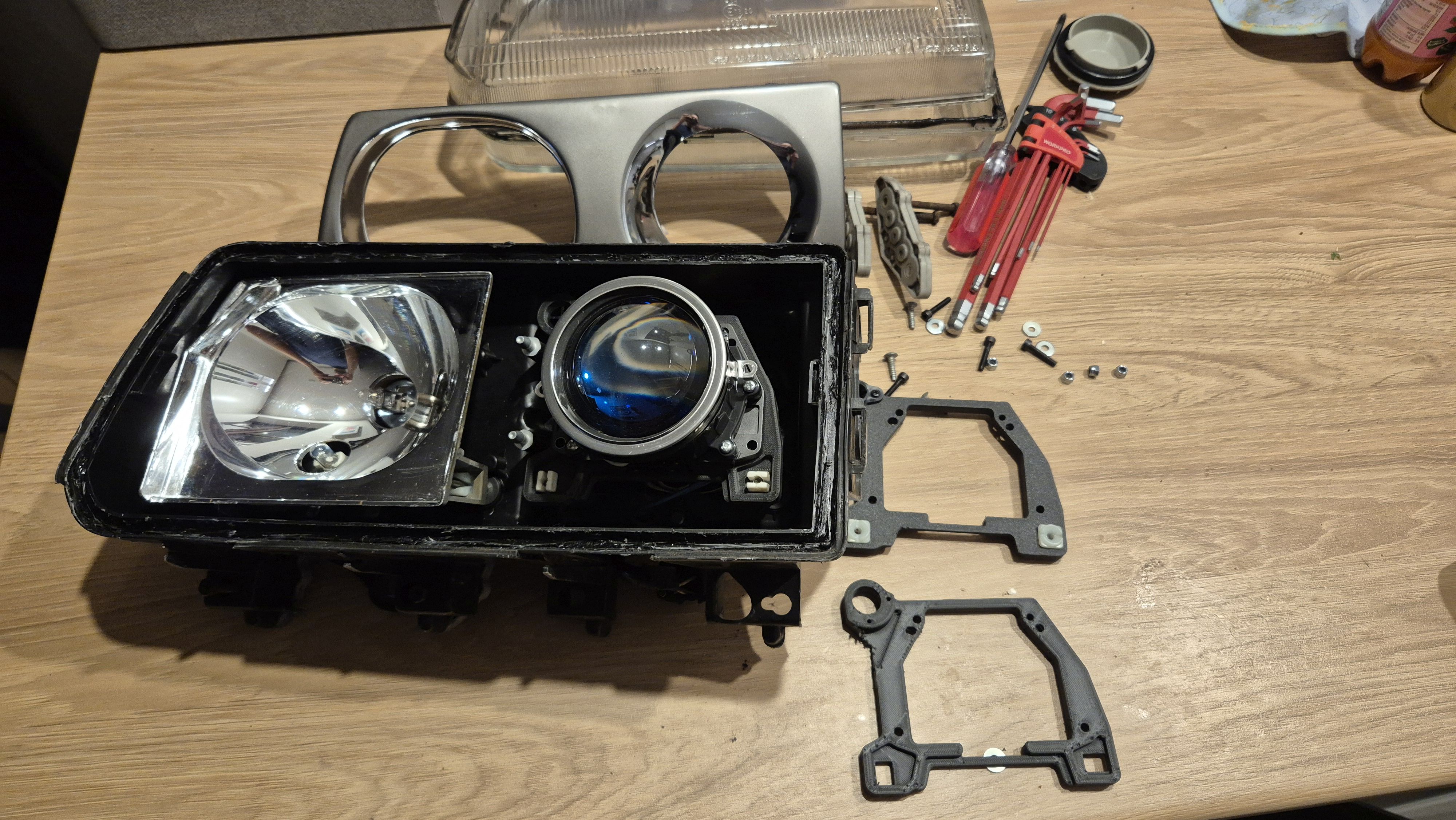
After measuring all the important dimensions, I designed a custom adapter that mounts directly in place of the factory projector and reflector assembly. This allowed me to install the bi-LED projector without cutting or permanently modifying the headlight housing.
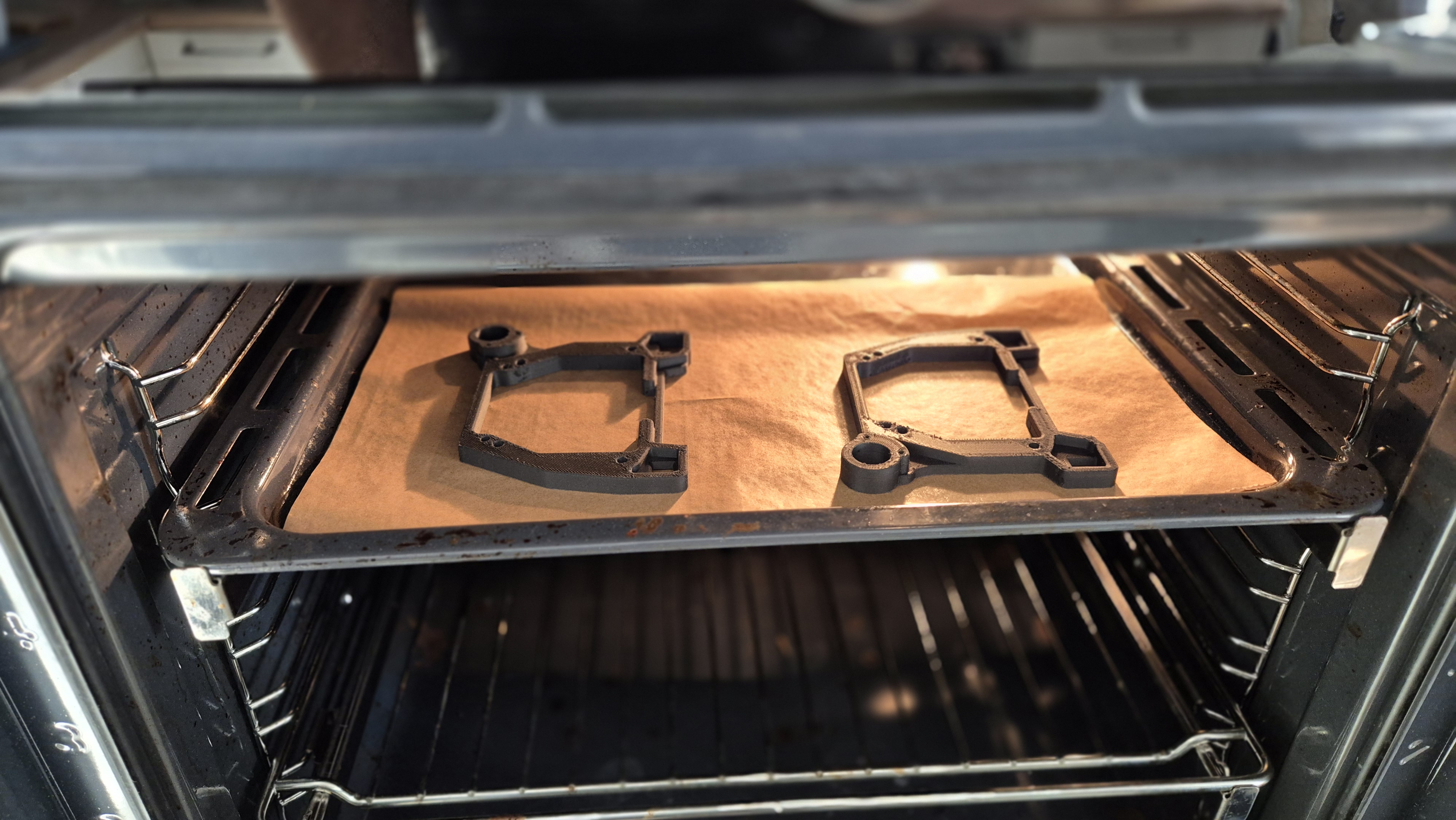
The adapter itself was 3D printed from PACF and then annealed in the oven after printing to improve its temperature resistance and long-term stability. At this point my wife is already used to seeing random car parts and 3D prints inside the kitchen oven, so nobody even questions it anymore.
Technically the adapter could also be CNC machined from aluminum, but honestly there’s just no real reason for it. Modern engineering-grade 3D printing materials are more than strong enough for this type of application, both mechanically and thermally.
The finished part feels properly solid, and because everything bolts into factory mounting points, the whole setup can still be returned back to completely stock at any time.
Test fitting and assembly
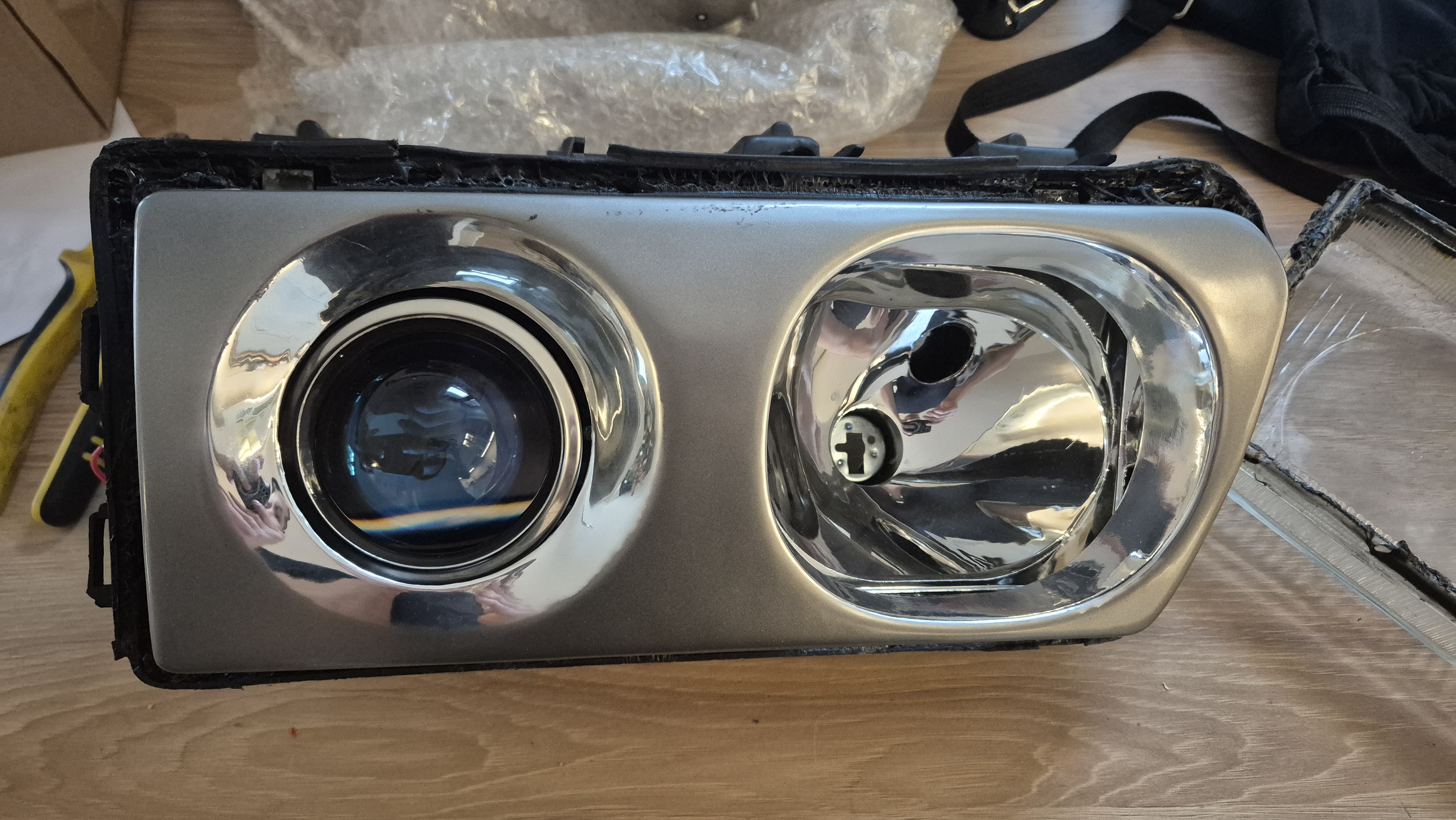
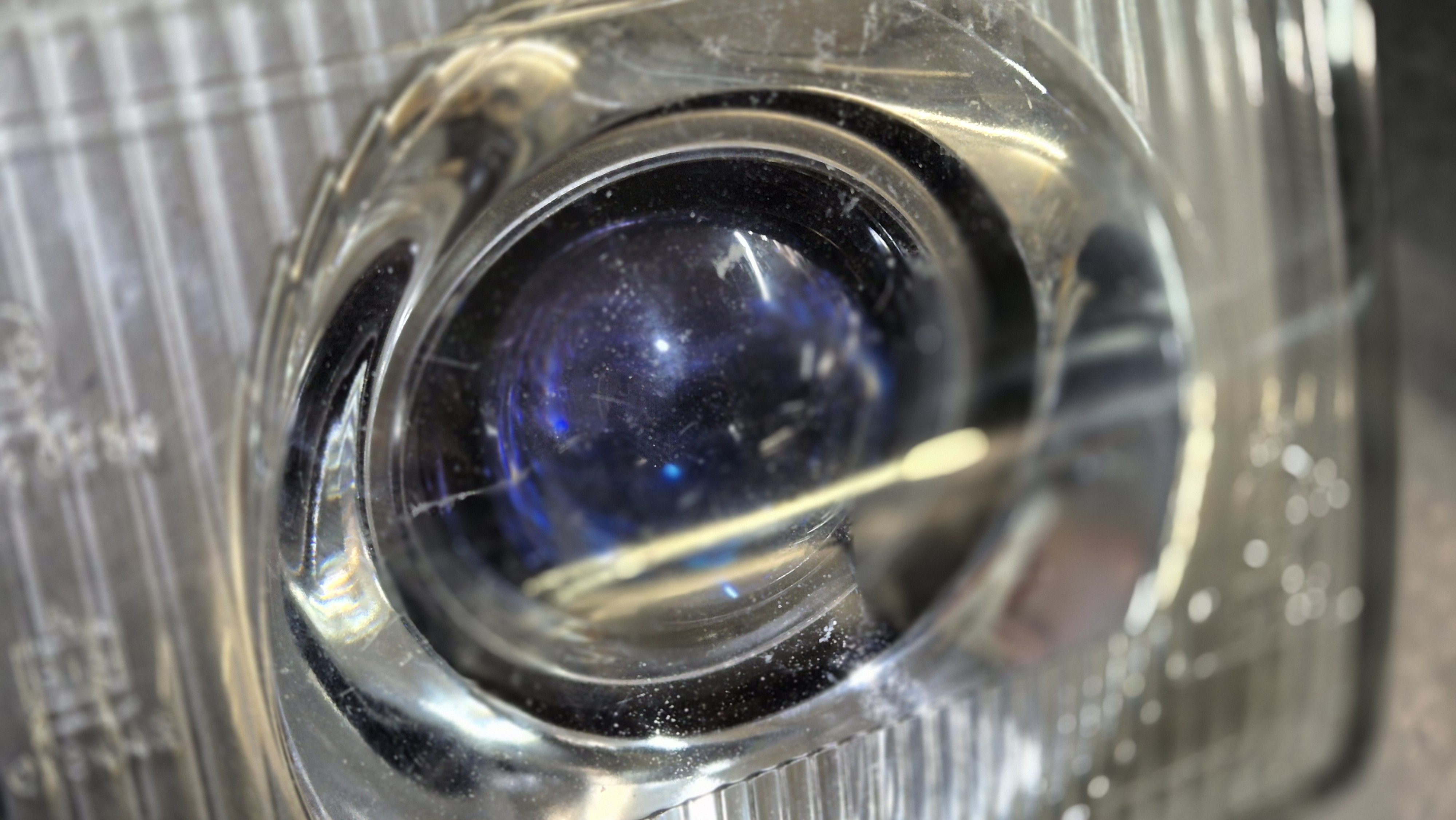
Before sealing the headlights back together, I spent quite a bit of time test fitting everything and making sure the projector sat perfectly centered behind the original lens opening.
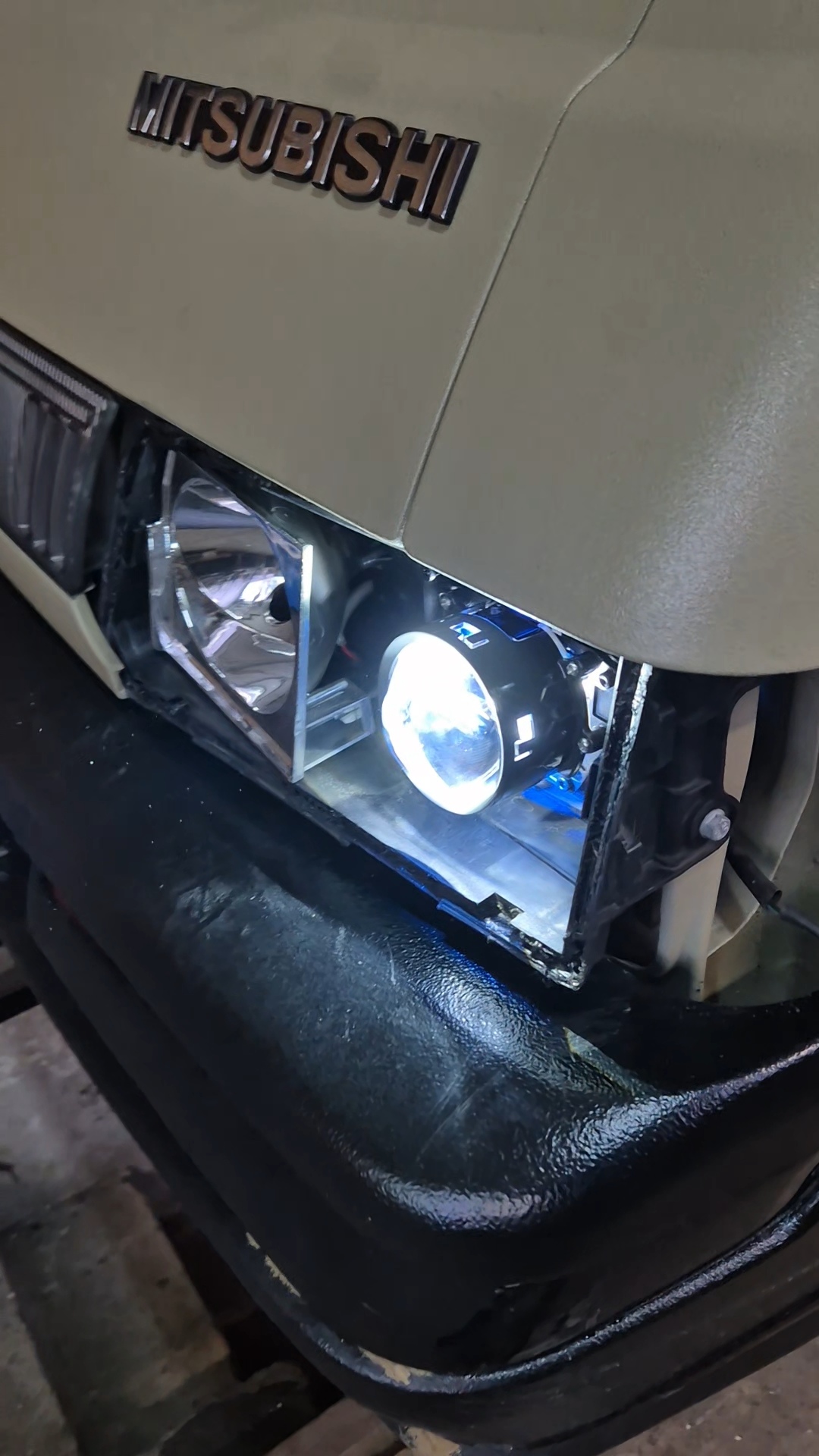
This part was important because I wanted the final result to look as factory as possible. The projector had to sit in exactly the same position as the original one so the outside appearance stayed clean and OEM-like.
Once assembled, the headlights honestly look like something Mitsubishi themselves could have made if the L300 stayed in production a bit longer.
Beam pattern and legality
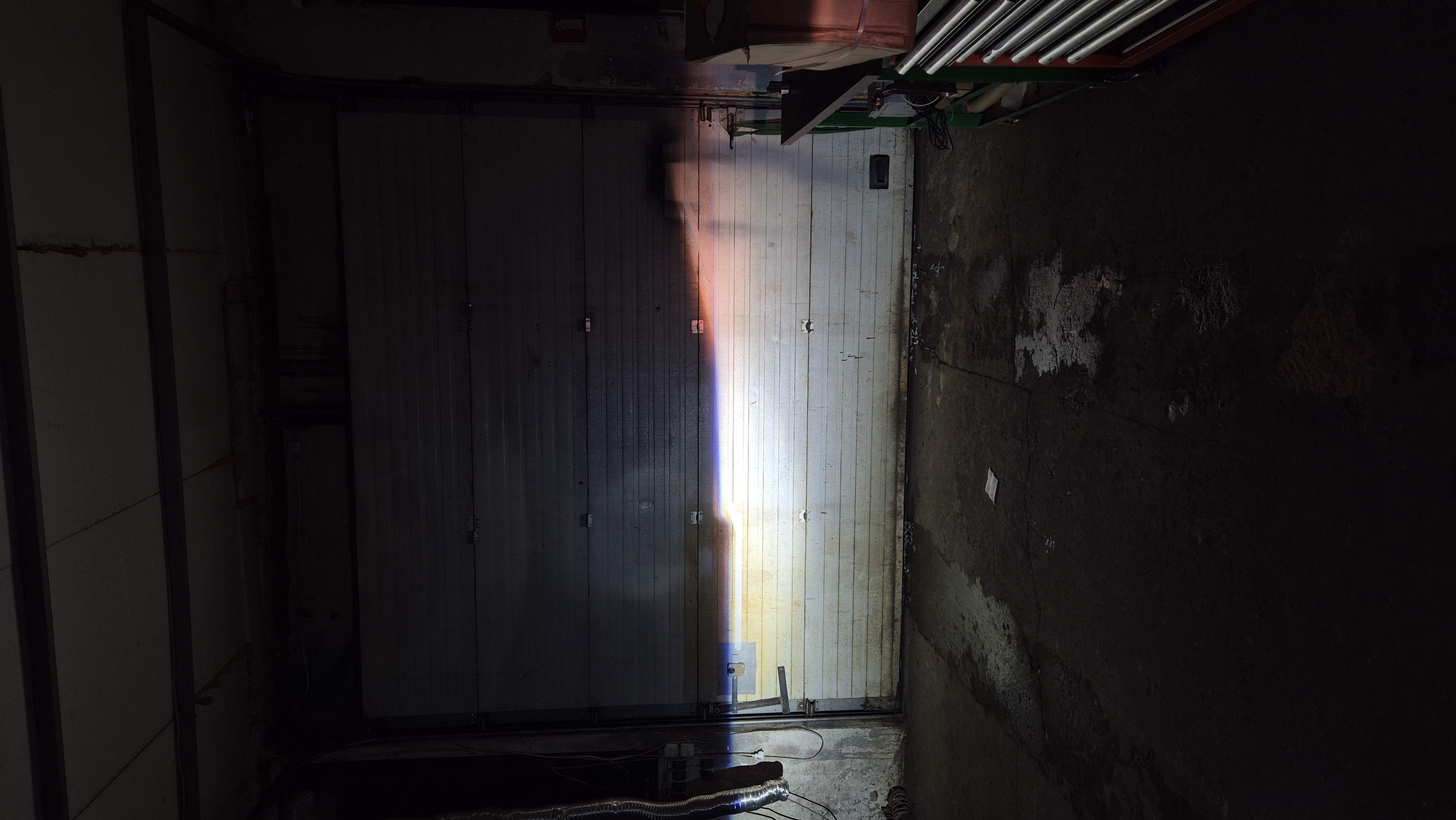
It’s worth mentioning that modifications like this are technically not road legal in many countries. Even so, I made sure the beam pattern and cutoff line were adjusted properly because I absolutely hate badly aimed headlights myself.
The cutoff is sharp, clean and sits slightly lower than before the conversion, so the lights don’t blind oncoming traffic.
Looking at the beam pattern against a wall, you can immediately see the difference compared to the original setup. The light distribution is much wider, brighter and more controlled instead of just throwing weak light everywhere.
Side-by-side comparison
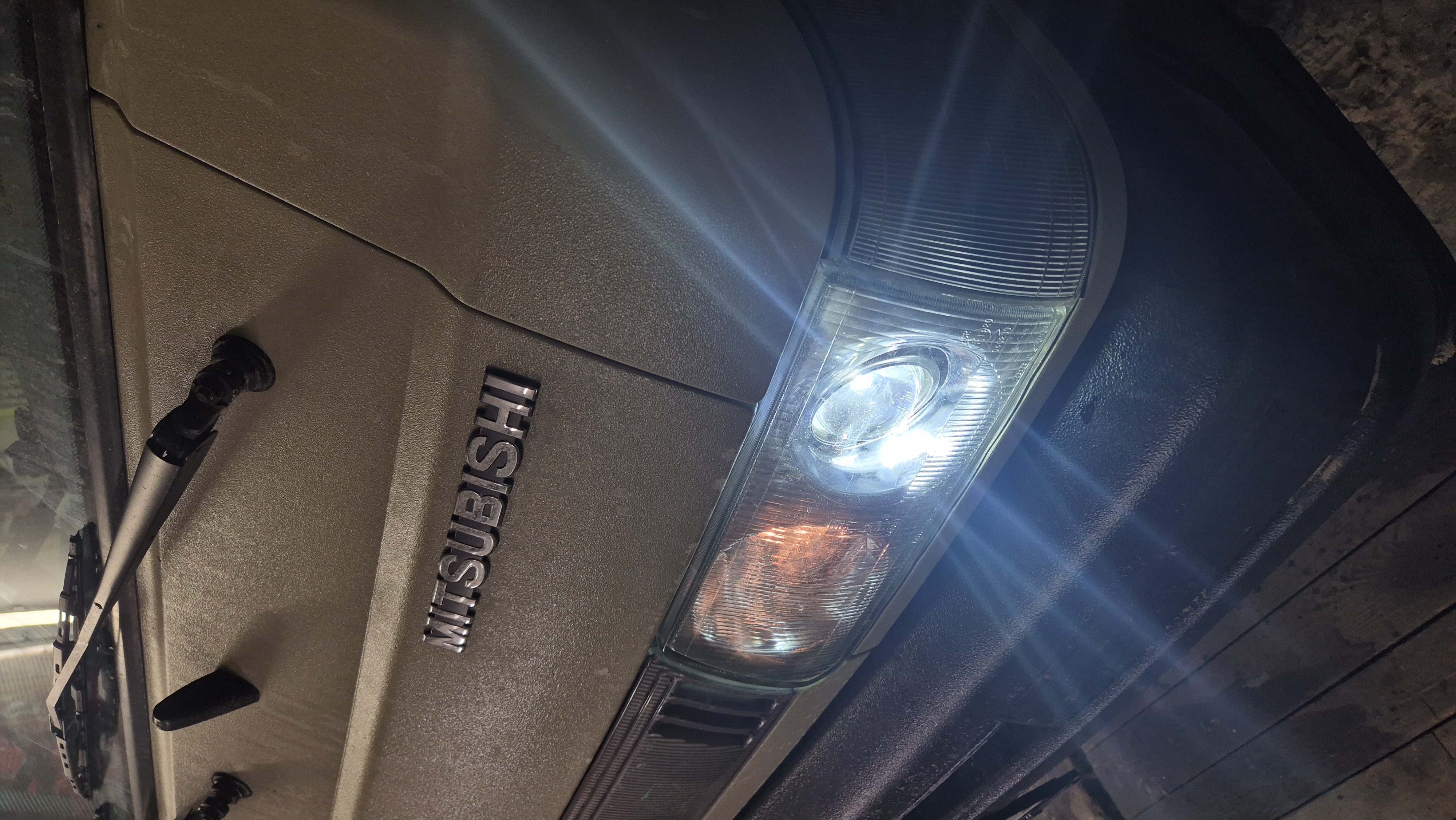
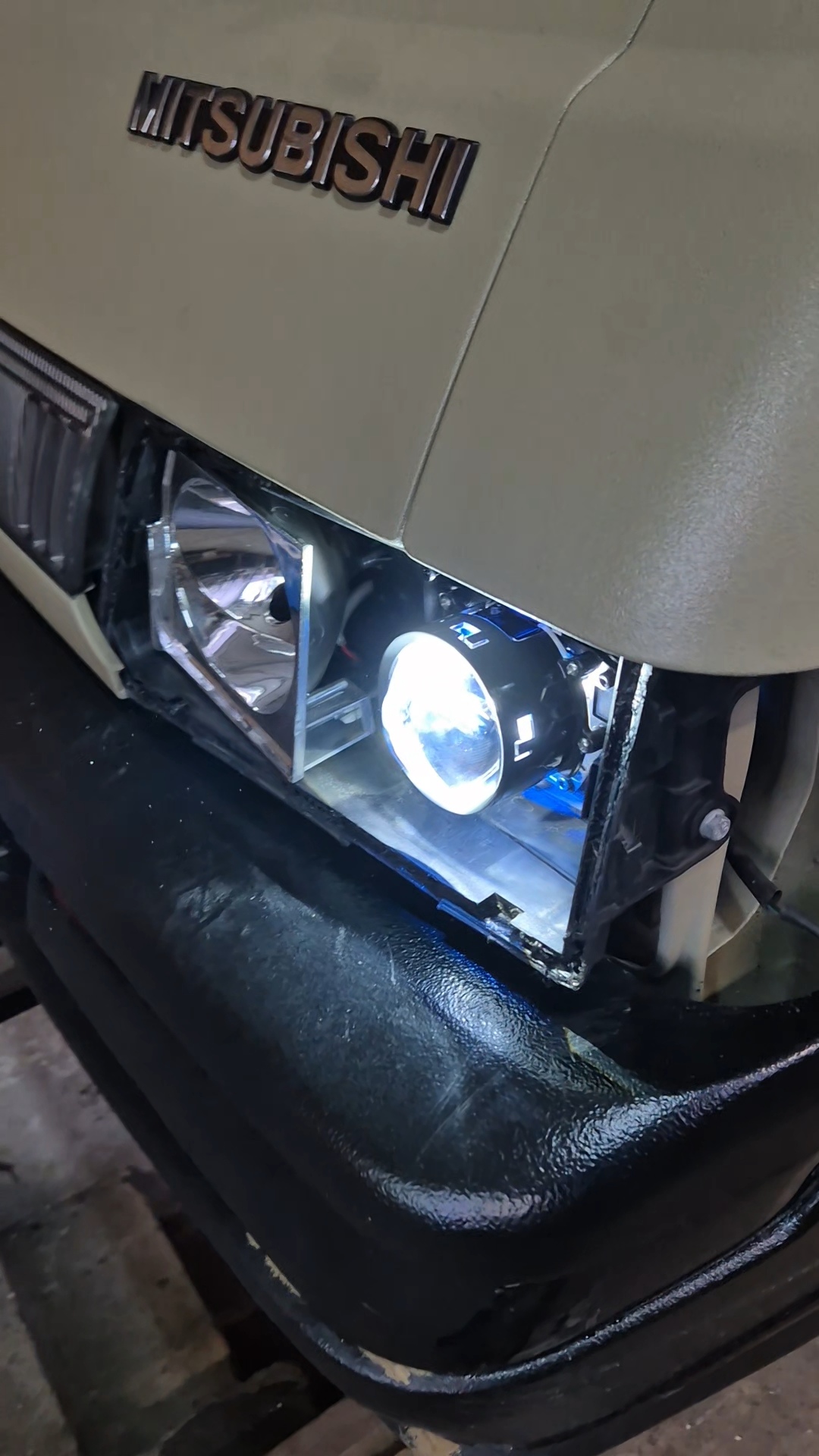
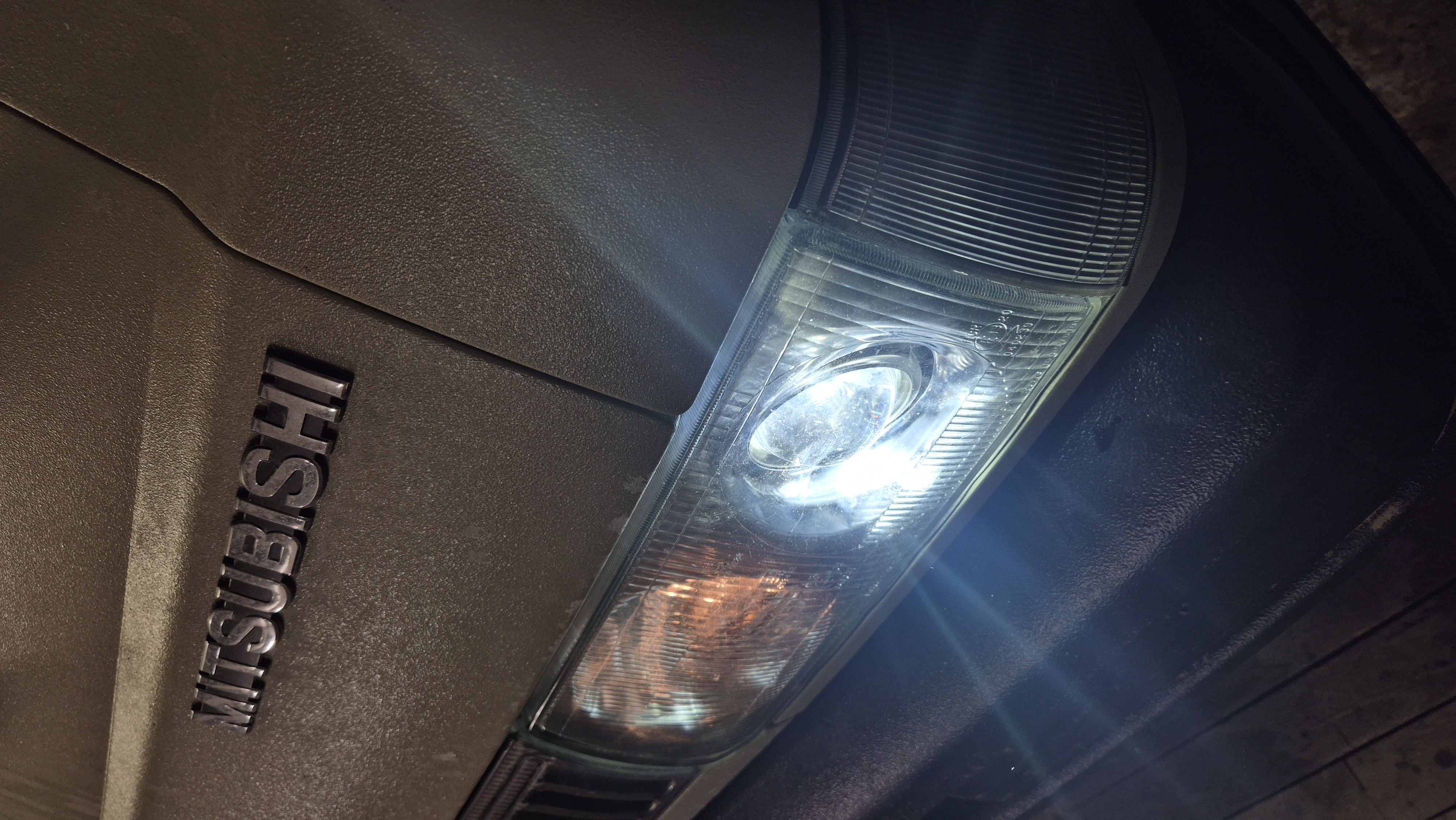
At one point I actually tested the difference side by side. I left one headlight completely stock and converted only the other side to bi-LED.
The comparison was honestly ridiculous. Next to the bi-LED projector, the original headlight looked more like a parking light than a proper low beam. The photos still don’t fully capture it, but in real life the difference is almost hard to believe.
The amount of light on the road is on a completely different level. The beam spread is smooth and even, visibility at night improved massively, and at the same time the sharp cutoff keeps the light exactly where it should be.
Parts used
- OEM headlights MB831282 and MB831281
- 3.0" Bi-LED projectors
- custom designed adapter plate available in our shop
Driving at night
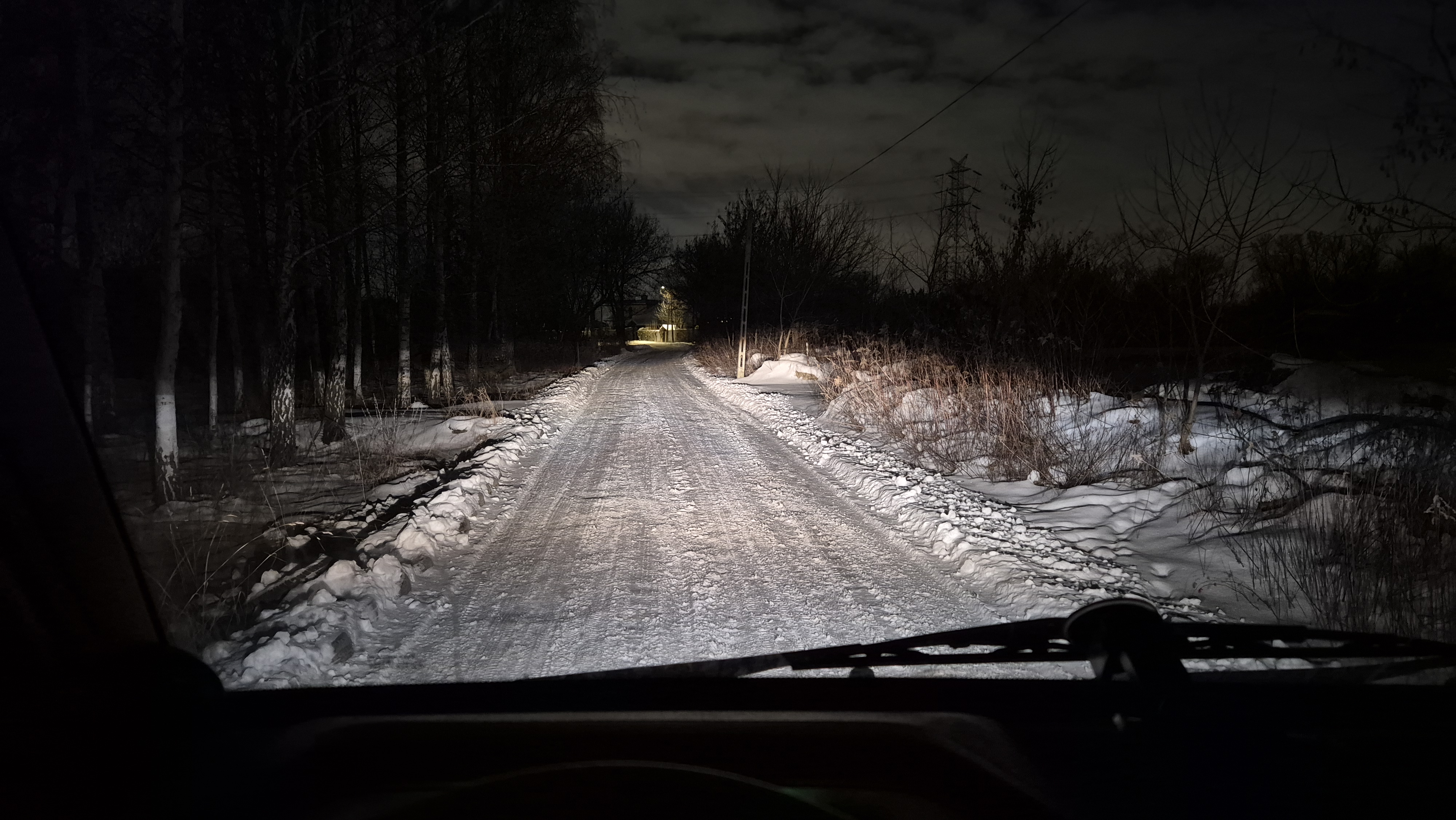
The biggest difference is noticeable on dark roads outside the city. You spot obstacles, animals or pedestrians much earlier, and night driving becomes way less tiring.
On snowy roads especially, the wider and more even beam pattern makes a huge difference because you can actually see the edges of the road properly instead of driving into a dark tunnel.
Personally, I think upgrades like this genuinely improve safety in older vehicles, especially cars designed back when lighting technology was nowhere near today’s standards.
It’s just a shame that, at least where I live, regulations still don’t really allow modifications like this — even when they’re done properly and responsibly.